7 min read
Growing Zucchini Without Losing the Best Fruit
Give summer squash enough room, tell male flowers from female flowers, and pick before the crop hides under the leaves.
On this page
A zucchini can grow from a promising little squash into something you need both hands to carry. The rapid change is part of its appeal, provided you like the fruit at that size. For tender skin and soft seeds, start looking under the leaves before there is much to see. A plant that gets a quick check every morning is easier to manage than one that gets a thorough inspection once a week.
Choose a variety that fits the bed. Most zucchini plants have a bush habit, but a mature bush can still spread several feet across. Compact varieties are useful for large containers or a small plot. A longer stemmed variety may need room to lean into a path. Fruit color can help with picking. Pale green and yellow varieties show up more readily under leaves than dark green ones.
Decide what the plant can cover
Walk around the spot you plan to use and picture the plant at its advertised width. Leave room to reach the base and enough space to pass the leaves without brushing against them every time. Squash stems and leaves can be prickly. If you place a zucchini at the edge of a bed, angle it toward an open section rather than across a frequently used walkway. Good air movement helps the leaves dry after rain.
Select a sunny, well drained place. Work finished compost into the soil if appropriate for your bed. Use a soil test or local advice before adding large amounts of fertilizer. Too much nitrogen can produce foliage that uses up the available space without helping fruit production. If you grow in a container, choose a compact cultivar and a roomy, stable container with plenty of drainage. One plant in a large pot is usually easier to water consistently than two squeezed together.
Start outdoors once frost danger has passed and the soil is warm. Zucchini seed grows quickly in warm conditions. If your season is short, start a few in individual cells a couple of weeks before planting out and keep the roots intact at transplanting. Avoid letting them become overgrown in their cells. Follow the packet depth and spacing. In a bed, sow an extra seed at the same station if you are uncertain about germination, then keep the stronger seedling by clipping off the other at soil level.
Watch the flowers come in two forms
In a bed with more than one squash variety, use a label near each crown. The leaves soon overlap, and a fruit can lie several feet from the stem that carries it. Follow the fruit stalk back to the crown before blaming a cultivar for weak production. Different squash can also flower on different schedules. If two plants are full of male flowers in the same week, the presence of a second plant alone will not make a female flower appear.
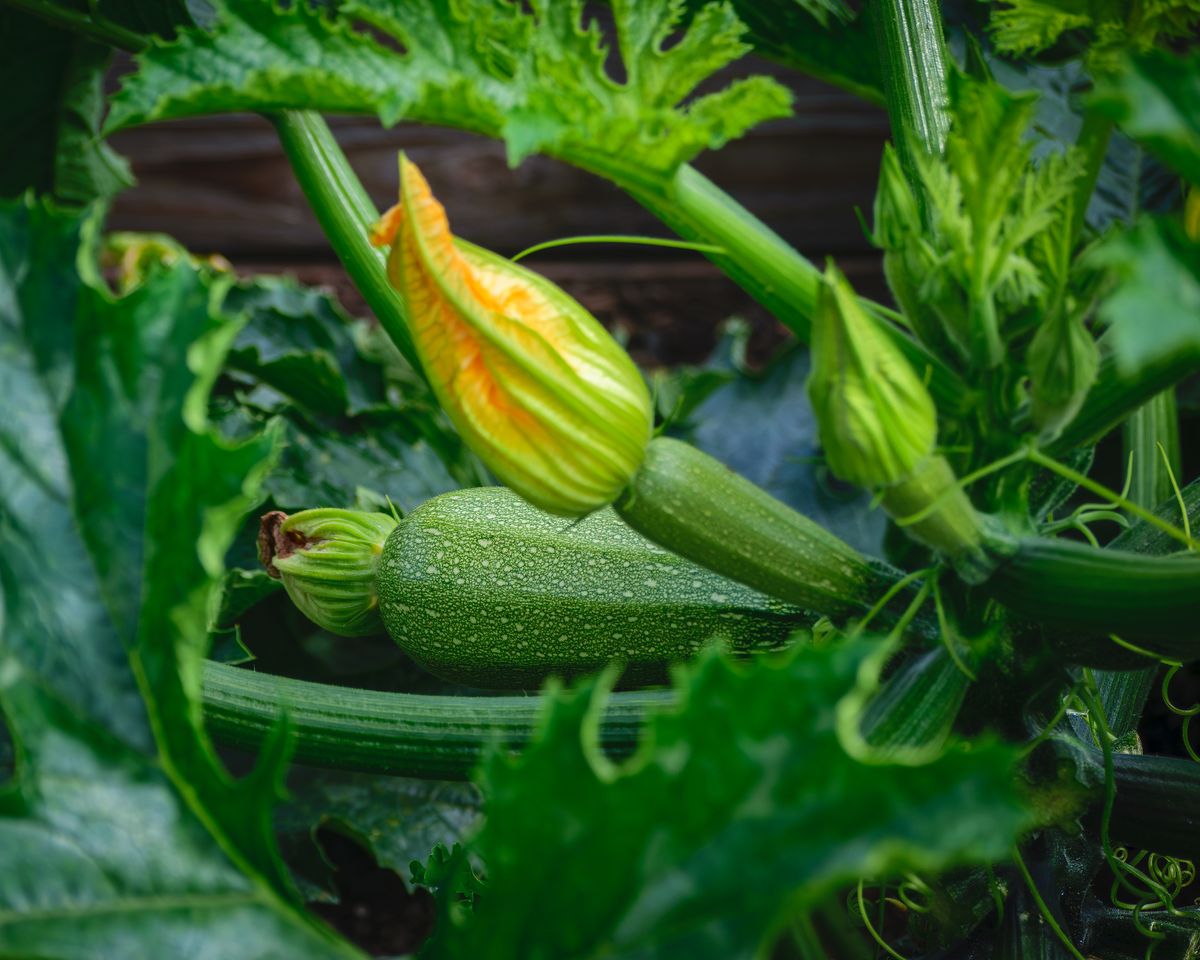
Early flowers often have a long, narrow stalk. These are male flowers, which make pollen. A female flower has a swollen base shaped like a very small squash. It may appear after several days or weeks of male blooms. If you only see male flowers on a young plant, give it time. Look early in the day, when squash flowers are open and pollinating insects are most likely to be visiting.
A female flower that closes and leaves a tiny yellowing fruit may have received too little pollen. Heat and other stress can also contribute to loss, so look at the plant as a whole. Check whether a male flower was open at the same time. If blooms overlap and you see few insects, try hand pollinating one or two flowers. Move pollen from a freshly opened male flower to the center of a newly opened female flower with a clean brush. Mark the plant or record the date so you can compare the result with an untreated flower. It takes only a few minutes and can tell you whether pollination was limiting.
A floating row cover can protect young plants from certain pests while they establish. Remove it at flowering if the plant depends on insect pollination, or open it to hand pollinate where that is practical. If you are using a parthenocarpic cultivar that can set fruit without pollen, follow the specific cultivar instructions. Do not leave a lightweight cover on hot, still days without checking conditions beneath it.
Check the crown before you blame the heat
Water at the base deeply enough to reach the roots and check how moist the soil is under the broad leaves. A little rainfall can run off the canopy and miss part of the root zone. Wilting in the heat of the afternoon can be temporary, especially if leaves recover in the evening and the soil is still moist. A plant that stays wilted deserves inspection. Adding water to a saturated bed can make a root problem worse.
Where squash vine borers occur, inspect the lower stem for sawdust like material and damage near the crown. Squash bugs may leave clusters of bronze colored eggs on the undersides of leaves. Both problems are easier to spot before the plant covers the whole bed. Ask a local extension office which pests are common and when to scout. A stem cut by wind, a dry root ball, or a disease can also cause a sudden wilt. Confirm what you are seeing before deciding on a treatment.
Pale markings near the leaf veins are natural on some zucchini varieties. Powdery mildew tends to form white patches that enlarge and spread, including away from the veins. Take photographs over a few days if the pattern is unclear. A few old leaves with mildew near the end of harvest may matter less than rapid spread on young leaves. Give the plant space and water near the soil when possible. Do not remove much healthy leaf area in an attempt to open up the center.
Pick when you still want to cook the fruit
Follow the cultivar description for harvest size. Many standard zucchini are tender at about six to eight inches long, or roughly fifteen to twenty centimeters. Round types are judged by diameter instead. For a particular plant, sample fruit at different sizes and decide what you prefer. Write down the length or use the span of your hand as a quick reference in the bed.
Cut the short stem with clean shears while supporting the fruit. Try not to twist it free, since the joint can tear or part of the stem can break off. Wear gloves if the leaves irritate your skin. Check the side of the plant that faces away from the path. An oversized fruit often started on that side and slid under a big leaf as it developed. Picking young fruit regularly helps maintain production while flowers are still forming.
Use larger sound fruit for dishes where grated or hollowed squash suits you, after removing tough seeds or skin as needed. Discard a squash that tastes unusually bitter. Do not continue tasting to check whether the rest of the fruit is less bitter. Keep damaged fruit separate from the tender, intact zucchini you want to hold for later. Promptly cool the harvest and handle it gently, since the skin of a young zucchini scuffs easily.
Make room for a second crop only if you need it
Compare the healthy part of the first planting with the trouble spot. A plant that declined in a low corner after standing water suggests you should correct drainage before sowing again. If leaves began with small mildew patches late in the season, a variety with better resistance may hold a useful canopy longer. Where squash vine borers are active, a later planting sometimes meets different pest pressure, but the timing depends on your region. Check local monitoring before relying on a particular date. Separate the new plant from a declining one so you can work around it and examine the first leaves without crawling through the old canopy.
Leave a little extra space if you are growing two varieties for comparison. Keep each harvest in a separate bowl for the first week. Note how often you had to search for fruit and whether the squash you found at the same length had a similar texture.
One vigorous plant may be enough for a household. Look at how much you picked and used in its heaviest week before planning another row. In a long warm season, a second sowing can replace an early plant that has declined from disease or age. Time it to establish before conditions turn cool. In a short season, you may get more value from one healthy planting and a clean bed for the next crop.
Keep a small basket beside the path when plants are producing fast. With both hands free, you can lift a leaf gently and cut a hidden squash cleanly without leaning across the center of the plant.
At the end of harvest, cut the stems into manageable lengths and clear plant material. Take notes while the symptoms are still visible if a plant failed early. Move the next squash planting to another area if you have room and previous disease makes rotation worthwhile. If the plant grew well but covered the path, shift the next planting point inward or buy a more compact variety. Keep the bed accessible enough that checking it becomes part of your ordinary walk through the garden.
Back to top