7 min read
Growing Parsley for a Steady Harvest
Get parsley through slow germination, then take mature stems from the outside so the center keeps growing.
On this page
Fresh parsley is often the herb you remember after the meal is almost ready. Put a pot where you can reach it quickly with scissors, and you can take two stems without committing to a whole bunch. One good plant can fill that role for months. The slow part comes at the beginning, when the seeds may sit in the soil for weeks before a row becomes visible.
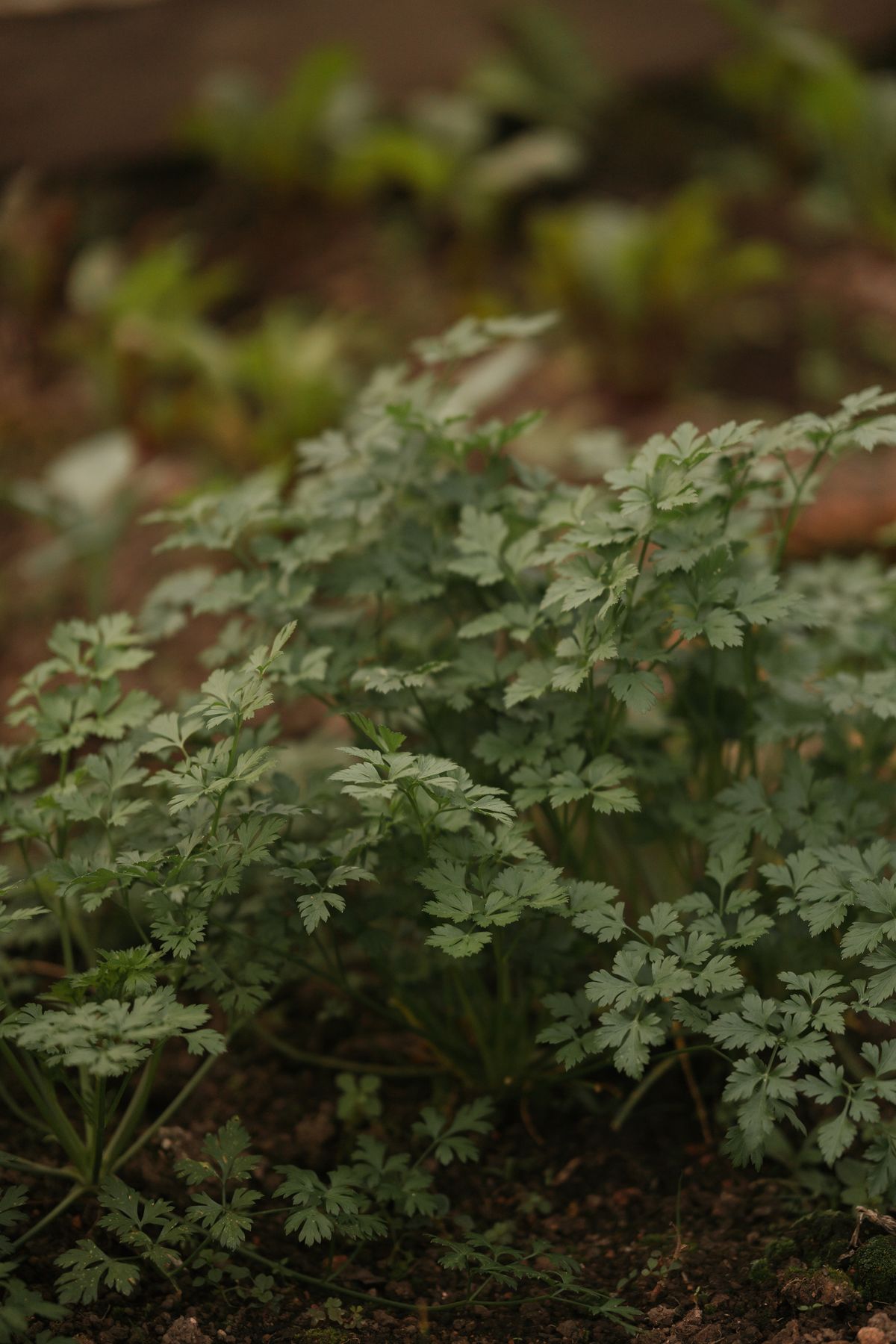
Flat leaf parsley has open leaves and is easy to chop in handfuls. Curly parsley grows in ruffled clumps and can be useful at the edge of a bed or in a visible pot. Both are worth cooking with. Smell a leaf if you can choose among plants at a nursery, and look for healthy new leaves at the center. The better variety for a steady harvest is one you will use often and can grow in the conditions you have.
Choose between seed and a nursery plant
Seed lets you grow several plants for the price of one and gives you access to more varieties. It also asks you to keep a seedbed moist through a longer wait than you might expect. Start from seed if you can check the tray or row often. Buy a healthy transplant if you want parsley soon and can find a plant with well spaced leaves and a sound root ball.
Parsley commonly behaves as a biennial. It usually grows a clump of leaves in its first season, then sends up flower stems after a winter or a period of cold. You can pick spring leaves from an overwintered plant while a new sowing gets started. Once the flower stalks take over, the older plant usually makes fewer of the tender leaves you want. Put the date on the label so you remember which plants have already passed through a cold season.
A store bought bundle of several seedlings can be planted as a small group, but watch how closely they are crowded. If the root balls come apart easily, separate them early. Roots disturbed in a tightly tangled clump may take time to recover. Moving the whole cluster into a slightly larger pot and thinning some stems can be easier when the plants are small. A single well grown plant often produces more usable stems than a pot full of thin seedlings.
Keep the seedbed ready for late arrivals
Sow in a fine, loose mix or a prepared row, following the packet depth. Parsley seed is small and should be covered lightly. Water the surface gently and keep it evenly moist while waiting. A cover can slow drying in a tray, but open it to check the seedbed and remove it when the first seedlings appear. A tray under a cover in direct sun can heat quickly. Use a bright location once shoots are visible and keep air moving enough that the surface does not stay soggy.
Germination can be uneven and often takes two to four weeks, depending on the seed and conditions. Keep a dated label and give the row time. If you sow outdoors, mark the ends so you can weed around it without disturbing the seeds. Make a fresh trial in a small separate pot if the original planting has been dry or very cold. Sowing over the original row can leave an unnecessarily crowded mixture if both batches emerge.
Thin when the true leaves can be recognized. Use fine scissors to remove crowded seedlings where pulling would lift their neighbors. Follow the packet spacing for full size plants. A few seedlings in a long tray may provide tiny leaves early, but a mature clump needs more space than its first set of leaves suggests. Transplant young seedlings with intact root balls if you started them in cells. Keep the crowns at the same level and water in to settle the mix.
Place the plant where leaves can replace themselves
Parsley grows in sun or partial shade. Direct morning light with some afternoon shelter can be useful in hot weather. In cool conditions, a bright open spot encourages fuller growth. Look for stems that lean far toward the light and take longer than expected to produce leaves. A container under a porch may be convenient for picking and too dark for steady growth. Move it outward in stages and compare the next leaves before deciding.
Choose a container with open drainage holes and enough depth for the roots. Use a loose potting mix that holds some water while still draining. A broad plant with many leaves may draw heavily from a very small pot. If you need to water it several times a day, inspect the root ball and decide whether it needs more room. Move up one pot size during active growth if it is tightly crowded. Set the crown above the finished soil surface so water cannot pool among the stem bases.
Water when the root zone starts to dry and let any excess drain away. Parsley can wilt in a dry pot, yet a constantly wet mix can also injure the roots. In a bed, a light mulch can help hold moisture once plants are established. Keep the base open so you can see where stems emerge. Follow the rate on a suitable fertilizer only if the soil or mix calls for feeding. Pale leaves after a long rainy spell may reflect wet roots rather than low fertility.
Cut whole outside stems
Stand over the plant and find where the largest stems meet the crown. Cut several from the outside, close to the base without damaging the growing point. Leave the small upright leaves in the middle. Shortening the tips of every stem leaves a ring of stems that no longer provide much of a harvest. Taking whole outside stems makes room for the next leaves as they expand. Rotate around the clump so you do not repeatedly empty one side.
If a dish calls for a full handful, harvest across two plants or wait until a large plant can spare the foliage. A substantial harvest followed by several warm, bright days is easier for the plant to replace than the same cut late in autumn. Look at the number of young leaves left afterward. If few remain, give the plant time to recover before picking again. Wash the stems shortly before use and trim away anything damaged.
Inspect the leaves before cutting. A yellow outer leaf can be ordinary aging, while a growing patch of distorted or discolored young leaves deserves a closer look. Parsley can host swallowtail caterpillars in areas where those butterflies occur. Identify the caterpillar and decide how much foliage you can spare. A second plant for the kitchen is an option if you want to leave one for insects. Avoid treating a crop until you know what is causing the problem.
Keep an older plant while a younger one takes over
When you have several pots, let the oldest supply the larger harvest while the youngest is still making its first full set of leaves. Move them to the same general light when possible so the differences in growth are easy to judge. If your old plant begins flowering before the new one is ready, use whatever broad leaves remain and make a note of the overlap. A spring transplant from the nursery can close the gap for this season. The next year, sow earlier or start one batch under better light. In a shaded garden, the limiting part of the year may be the low winter light rather than the arrival of a flower stalk. Put the best lit spot aside for the younger plant while it establishes, then move it outdoors when conditions suit it.
Parsley can tolerate cool conditions, but cold tolerance depends on the plant, site, and severity of the weather. A sheltered garden plant may keep useful leaves longer than a pot exposed to freezing wind. If you bring a container inside, put it in strong light and check for pests. Growth may slow in winter. Use the leaves you have and expect smaller harvests until light improves.
In spring, watch for an upright flowering stem rising out of the old crown. Take the remaining leaves while they are useful. Leave a healthy plant to flower if you have room for it. Its small flower clusters can attract insects and later produce seed. If you need the space for a leaf crop, pull it once your young plants can supply the kitchen. Compare when you first picked each plant and how long its best harvest lasted. That tells you when to sow your next backup pot and whether two plants or three would give you a steady supply.
Plant a second small pot if you cook with parsley frequently. The first can supply handfuls for a meal while the other is left to rebuild leaves. At the end of winter, keep track of which pot is in its second season so flowering does not surprise you at the same time in both pots.
Keep a small note near your seed packet about the days between sowing and the first cut. Record the harvest you could take without leaving the plant sparse. Germination time alone can make a packet seem slow even when its young plants grow rapidly after emergence. A note about both stages helps you schedule a fresh pot before the old one starts to flower.
Back to top