7 min read
Spot Aphids Before They Distort New Growth
Find the insects themselves, check whether predators are already at work, and choose a response that fits the plant and the damage.
On this page
The curled leaves at the end of a broad bean stem can hide a whole colony. The only clue from a few steps away may be an ant repeatedly climbing the same stalk. An older rose leaf below the colony can be sticky while the plant that produced the sticky liquid is actually a branch overhead. Aphids are easier to manage when you read these small signs together and then look for the insects. A curled leaf alone does not tell you what is causing it or whether treatment will help.
Check the growing parts first
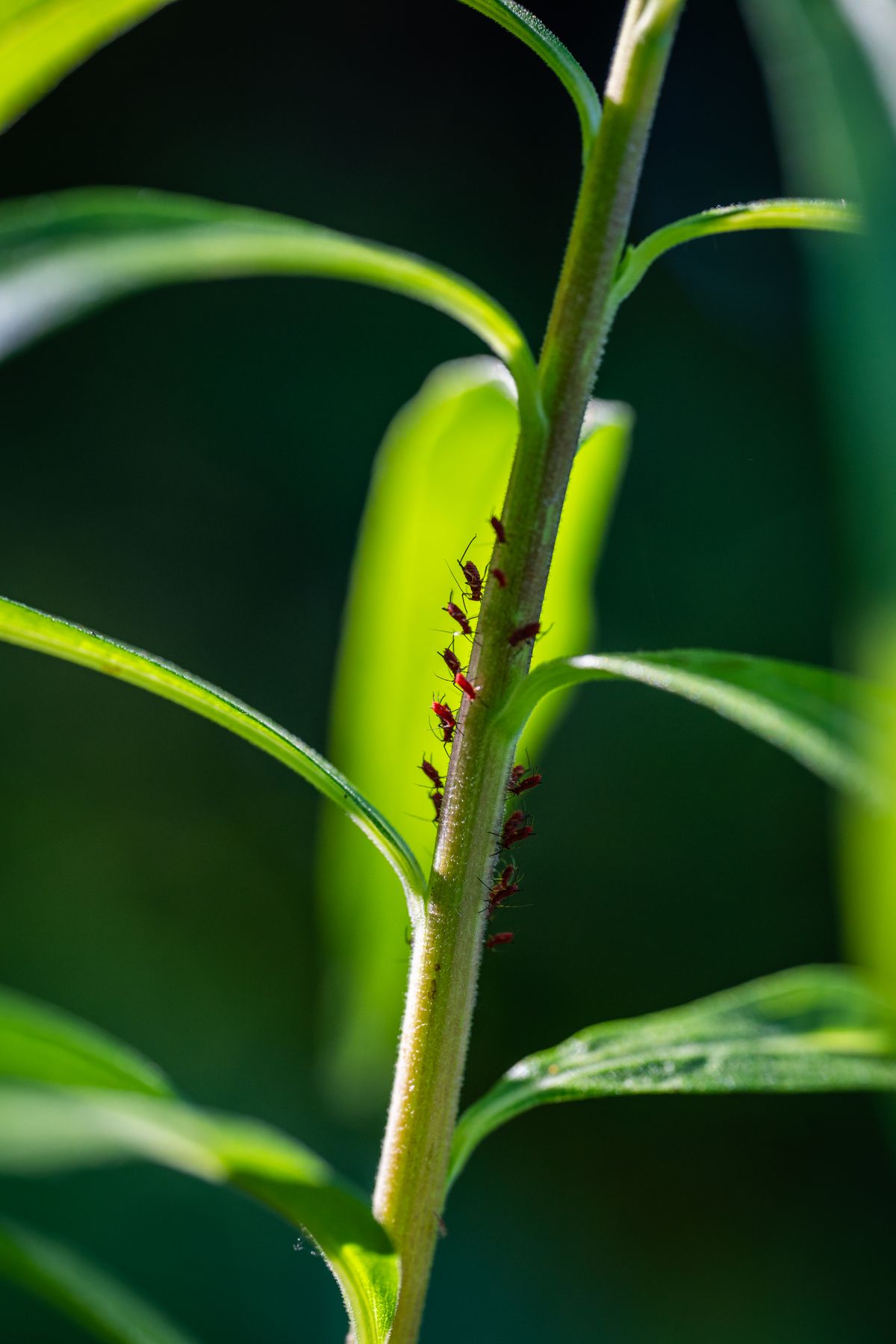
Look at the newest shoots, stems just below buds, and the undersides of leaves. Many aphids cluster where tissues are tender. Adults are small, soft bodied, and often shaped like a pear. Colors range from green and pale yellow to dark brown or black, depending on the species and stage. A hand lens can help you see the two small tubes near the rear on many common kinds. Some individuals have wings and can arrive on a plant that looked clean the previous day.
If you see pale dry flakes near a colony, look more closely. They may be shed aphid skins rather than eggs or a second kind of pest. Honeydew, the sugary liquid excreted by aphids and several other sap feeders, can collect on leaves and nearby surfaces. A dark sooty coating can grow on it. Neither honeydew nor sooty mold identifies aphids by itself. Look for scale insects, whiteflies, and mealybugs if the expected colony is missing. A plant under a sticky tree could be catching honeydew from above rather than producing it.
Watch for ants walking to and from a shoot. Some ants feed on honeydew and defend aphids from predators. A trail gives you a direction to look, not a diagnosis. Compare the damaged shoot with another shoot on the same plant. Aphids can distort expanding leaves, but similar curling can come from heat, uneven irrigation, certain diseases, or exposure to herbicides. If every plant on the same edge is distorted and you cannot find aphids, investigate other causes before applying an insect product.
Count the parts that matter
Rather than counting every insect, mark a few shoots and note whether colonies are absent, scattered, or covering the growing tip. Check whether the plant has enough healthy growth to tolerate some feeding. A vigorous mature shrub with scattered aphids may recover without intervention. A tray of young transplants with colonies on most of the growing points has less room to lose. Some crops can also suffer from aphid transmitted viruses. If virus is a serious local issue or symptoms suggest disease, consult local crop guidance; removing visible insects cannot cure an infected plant.
Look again in a few days if the damage is modest. Find whether the colony is spreading into new tips or whether it has stopped increasing. Existing distortion will not necessarily straighten when the insects are gone, so use new leaves as evidence. If you want to compare, photograph the tip against the same background or place a small tie loosely below it. Do not leave a tie where it can constrict an expanding stem.
Check neighboring plants, including weeds and the plants that went home from the nursery on the same day. Inspect seedlings before setting them into a shared bed. If the affected plant is indoors, move it away from others if you can and examine plants that shared a shelf. Place it in suitable light while isolated. Keeping a plant in a dark place for an extended period can weaken it, even if the insects are no longer on display.
Look for allies before interfering
Aphid colonies attract a range of predators. Lady beetle larvae can look like little dark alligators, sometimes with orange markings. Lacewing larvae have conspicuous jaws, while hoverfly larvae may look more like small tapered maggots moving among the colony. Brown swollen aphids stuck to leaves can be mummies produced by parasitoid wasps. A small round exit hole in a mummy suggests the adult parasitoid has already emerged. Take a close look before you wipe away everything that appears unfamiliar.
Give predators time when the crop can tolerate the feeding. If several colony sites contain active larvae or mummies and the newest leaves are still growing, inspect again rather than spraying out of habit. Avoid broad spectrum insecticides that can kill beneficial insects and cause a rebound in pests. Do not buy and release insects without checking suitability and local rules. A diverse garden with accessible flowers and fewer disruptive treatments can support resident predators, although that will not stop every outbreak on demand.
Where ants are tending the colonies, look for practical ways to interrupt access without harming the plant or creating a trap for other wildlife. Move a potted plant so branches do not touch a wall or another plant. Clean sticky surfaces and inspect for nests in outer pots. If control of ants is necessary, use local integrated pest management guidance and products suited to the setting. Do not wrap a tender stem directly with a sticky material. Even if ants are present, the plant may recover when enough predators find the aphids.
Start with physical control where it fits
On a sturdy outdoor plant, a targeted stream of water can dislodge many aphids. Support tender stems and direct the spray at the colony and leaf undersides. Start with modest pressure; the goal is to move insects without tearing growth or spreading wet soil. Do this early enough that leaves can dry, especially on plants prone to leaf disease. Check the same shoots a day or two later and repeat only if living colonies persist. A hose is a poor choice for very small plugs that could wash out of their cells.
A single crowded tip on a vigorous plant can sometimes be removed with clean tools. Make sure the plant can spare the tip. Cutting away an entire young pepper's growing point may cost more than the aphids would. On an indoor plant, wiping or rinsing accessible leaves can work for a small infestation if the species tolerates it. Check again where stems branch, as missed insects can repopulate the plant. Dispose of badly infested trimmings appropriately and clean the tools.
If a product is needed, choose a locally authorized one labeled for the plant, site, and pest. Insecticidal soaps and horticultural oils often depend on contact; use them only as directed and be aware that heat, sensitive plants, and open flowers can change how safely a product can be applied. Do not substitute household detergents or assume a recipe for one plant is safe on another. Follow label directions about temperatures, reapplication, edible harvest intervals, and pollinators. Treat the smallest area that needs it, then check new growth rather than respraying on a fixed calendar.
Change what makes outbreaks hard to see
Inspect fast growing shoots at regular intervals during periods when aphids usually appear. Space plants so you can reach the growing points without breaking them. Use fertilizer appropriate to the crop rather than trying to push more tender growth after an outbreak. A plant stressed by drought or poor roots may be unable to grow through moderate feeding; solve that problem without keeping the root zone wet. Healthy growth gives you more time to observe what happens.
If only one variety or one position repeatedly has trouble, keep that information for the next planting. You might choose a different cultivar, set new seedlings where they are easier to inspect, or leave more room at a bed edge for natural enemies and access. Start by saving a photo of one confirmed colony and the signs that helped you find it. Next time you see a curled shoot or an ant trail, you will know where to look and what evidence to ask for before deciding what to do.
Keep close records on edible crops
If the plant is grown for leaves or flowers you will harvest, separate cosmetic injury from direct contamination. Several insects on an old leaf that will be discarded are different from colonies lodged inside a tight, edible growing tip. Check the part you plan to take indoors. Follow ordinary produce washing and handling guidance, and observe the full harvest interval on the label of any treatment you use. If you cannot identify the plant, the pest, or a safe product for that crop, wait for reliable local advice before applying anything.
If aphids return to a plant shortly after rinsing, examine the folded leaves the spray did not reach. Separate two soft leaves gently to see inside. A persistent pocket of aphids calls for a more targeted response than stronger water pressure across the whole plant.
Write down what happened in the days leading to the outbreak. New growth after heavy feeding, drought followed by irrigation, and warm indoor conditions can all change how quickly a colony becomes visible. An observation such as "five of twelve new tips carried live colonies on Monday; two did by Thursday after rinsing" is more helpful than a note that merely says "sprayed for aphids." It gives you a way to decide whether to repeat an action and whether a quieter response would be enough next time. Leave time to look for predators at the follow up. Their arrival can explain a sharp decline and help you avoid treating again unnecessarily.
Back to top