7 min read
Sowing Cosmos for a Long Season of Flowers
Give cosmos warm soil and open light, then use thinning, support, and timely cutting to make its airy growth work in the garden.
On this page
Cosmos seedlings are easy to miss at first. The young leaves are narrow, the stems scarcely raise themselves above the soil and the whole row can appear too slight to stand against a gust. By late summer, the same plants may be high enough to look through from a chair. Much of the work is deciding where that loose growth will be welcome. Choose a variety for the available height, sow in a place that has warmed, and give the stems space before they knit together.
Decide which cosmos belongs in the spot
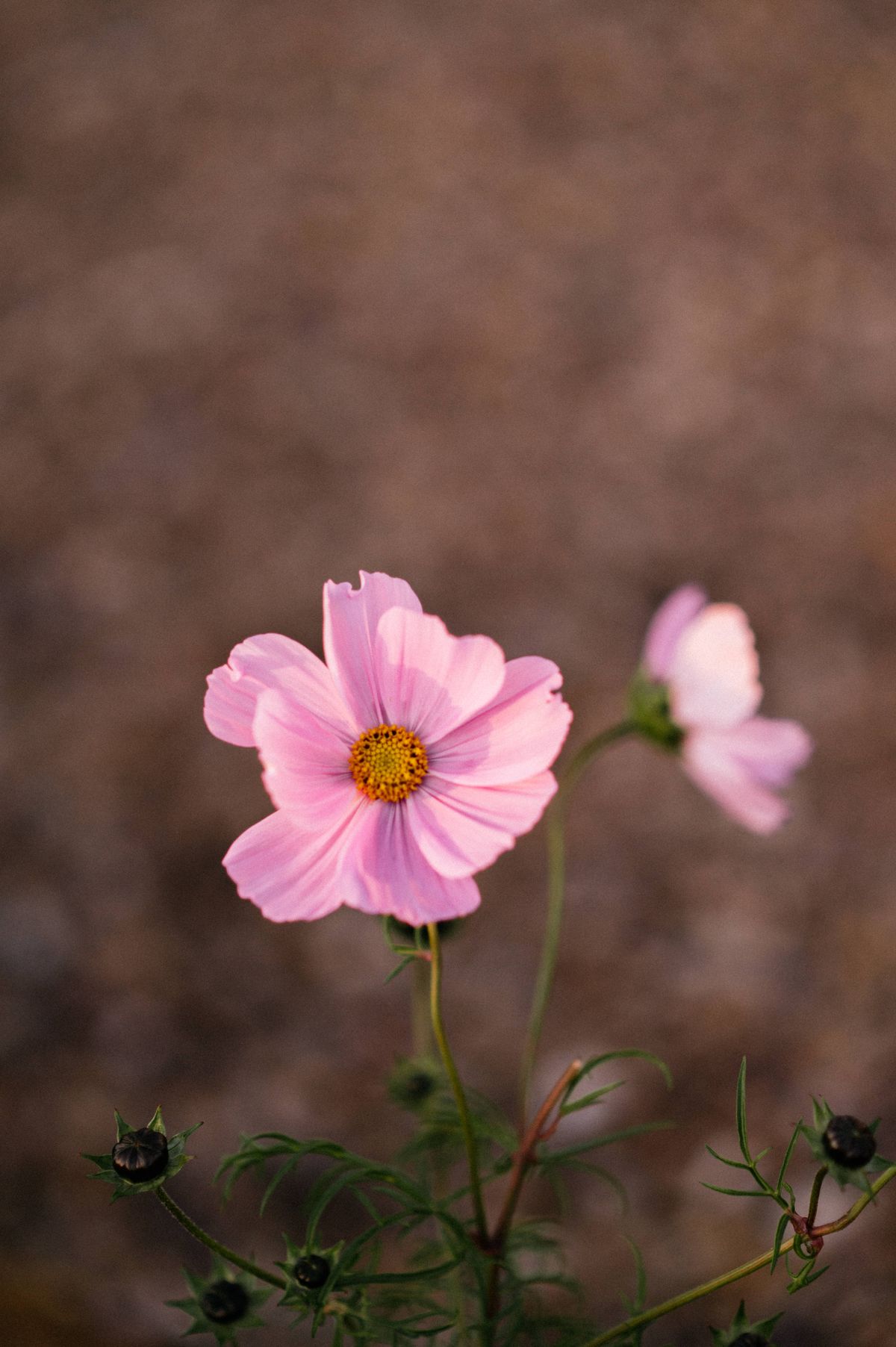
The familiar garden cosmos with fine, divided leaves is Cosmos bipinnatus. It includes tall white, pink and burgundy selections as well as compact cultivars. Sulfur cosmos, Cosmos sulphureus, often bears warm yellow, orange or red flowers and has broader leaf segments. It also comes in a range of heights. The image on the packet shows the flower. The mature size on the label tells you whether it is a plant to put in front of a window or at the back of a wide bed. In a small garden, the difference between a two foot selection and a tall strain matters long before the first bloom.
Look at where the sun reaches the bed during summer. Cosmos is happiest in an open position with plenty of direct light. A sunny fence line can be useful if you are able to reach the planting from the other side. Along a narrow path, place tall plants back far enough that their branches can lean a little without taking over the walkway. Where soil has received heavy fertilizer or repeated manure applications, expect vigorous leaves and stems. Choose a less rich part of the garden if flowers are the main goal. The plants can grow well in average soil that drains freely.
Draw a rough outline of where the plants will stand. A loose group of three or five can look more natural in a border than evenly spaced individuals all along the edge. A straight row is easier to weed and cut. In either arrangement, allow for the width on the packet. Leave yourself a place to put a foot down while you weed or pick. Cosmos foliage is airy enough to see through, but branches from several crowded plants can tangle into a mass that is hard to lift once it falls.
Sow outdoors when the soil has warmed
Prepare the surface once the threat of frost has passed. Remove weeds while they are small and rake the soil lightly. Make a shallow line or several marked stations. Sow according to the packet and cover lightly, commonly with about a quarter inch of soil. Use a gentle spray or a watering can with a rose to settle the soil. Mark the row so you can water the right place while the surface is still bare. With a border group, a few labels across the patch can help you see the intended outline when there are also weed seedlings.
Keep the top layer lightly moist during germination. A warm sunny spot can dry much faster than an adjacent shaded bed. Check after a windy afternoon even if the row was watered in the morning. If a rainstorm forms a crust, lightly moisten the surface and break the crust next to the rows with a finger. Avoid scraping directly over emerging stems. Seedlings have a better chance to grow evenly if they can emerge without being buried under soil washed down from the upper edge of the bed.
Thin after the plants start showing their characteristic leaves. Snip extra seedlings close to the ground if the roots are already intertwined. Give tall varieties the room recommended on the packet, often around a foot or more depending on the strain. Keep plants that are well positioned even if they are a little smaller than the crowded ones. A uniformly open patch helps the branches develop into usable shapes. Move a spare seedling with a plug of soil if you need to fill a gap and can water it afterward.
Start a few indoors for an early group
An indoor start is useful if spring soil warms slowly or if you want to place a few specific colors among other plants. Sow in individual cells a few weeks before outdoor planting. Set the trays under strong light as soon as seedlings emerge. A shallow tray near a window can still be too dark on several cloudy days. If the stems grow thin and lean all the same way, increase light and turn the tray. Move seedlings outside gradually before transplanting, beginning in shelter and extending exposure to sun and wind.
Water the cells before setting them out so the root plugs hold together. Plant at the depth the seedlings were growing and water around each plug. In a mixed bed, insert the label where it can be seen from the path. A slightly wilted seedling can recover once the soil cools in the evening. After several days, check that the lower stem remains firm and the soil around the plug has been taking up water. Protect tender young plants if an unusually cold night arrives.
Avoid starting too many weeks early. Cosmos can grow quickly in a small cell and become difficult to carry without tangling stems. If planting is delayed by cold weather, move well rooted seedlings into a slightly bigger pot and increase space between them. Pinch healthy tall plants once they have several pairs of true leaves if you want branching. Keep some unpinched to compare the first blooms. Short cultivars that already branch freely may need little shaping.
Keep tall stems where you want them
In a windy garden, place stakes before the branches spread. Put a strong stake at each end of a row and run a soft line along both sides. Add a higher line when stems extend well above the first. In a clump, a ring of short stakes with one or two tiers of string can keep the stems gathered without making them look rigid. Set the stakes outside the main root area when plants are still small. A long cane pushed into a mature clump is harder to place without splitting a branch.
Take a look after heavy rain. If the entire clump has tilted, lift and support the stems a little at a time. A cracked stem that hangs over a path can be cut above a healthy branch. Some flattened plants continue flowering where they lie. If you have room, you can let the shoots turn upward naturally. A bed visible mainly from across the garden may look fine while the plants occupy the edge for a week. Near a path, move them while you can still see where the branches join.
Water during dry spells, especially before seedlings are established. In summer, check the soil beneath the broadest part of the foliage. A branch canopy can shed a passing shower toward the edges and leave the center dry. Water deeply enough to moisten the roots and allow the soil to drain. Established cosmos generally tolerate some drying in ordinary garden soil. A small pot or a shallow raised bed may need more attention. Use plain water if the plants are already making strong leafy growth and there is no evidence they need added nutrients.
When you use a cosmos branch in a vase, look for unopened buds on the cut stem. A useful branch can carry one open flower and several smaller buds, which gives the arrangement height without requiring another full stem from the plant. Strip the lowest side branches if they would sit underwater.
Gather flowers and plan the next sowing
Cut fresh blooms when the petals have just opened or when a well developed bud is beginning to show color. Flowers fully open in the heat of the day may have less vase life than ones harvested early. Follow the stem down to a side branch or leaf pair and cut where you can still leave useful growth. Strip leaves from the portion that will stand in water. The fine branches make good material between heavier flowers. Allow them a little room in the vase so the delicate stems do not all turn to the same side.
Deadhead flowers that have faded if you want the plants to keep flowering. The remains will change from soft petals to a dry cluster of narrow seeds. Leave some in place if you want to collect them or give birds a chance to use them. In mild gardens with bare soil, cosmos can also sow itself. Remove most of the old heads before seed drops if you need to control where next year's seedlings appear. Keep a paper envelope of seed from any group you particularly liked and write down the parent color and height. Open pollination can produce a mixture.
If the plants grow vigorously with few buds, consider the site's light, soil fertility and the characteristics of the cultivar. Some strains begin flowering earlier than others. Shade and high nitrogen can keep stems growing longer without supplying the flowers you expected. Compare two sowing dates or two sites the next season. Mark one early group and another a little later if your growing season allows. The difference in their first flowers and their response to hot weeks will tell you how to time the garden better than a calendar borrowed from a different climate.
Back to top