7 min read
Growing a Jade Plant With a Sturdy Trunk
Use a bright indoor position and measured watering to grow a compact jade, then prune deliberately as the branches get heavier.
On this page
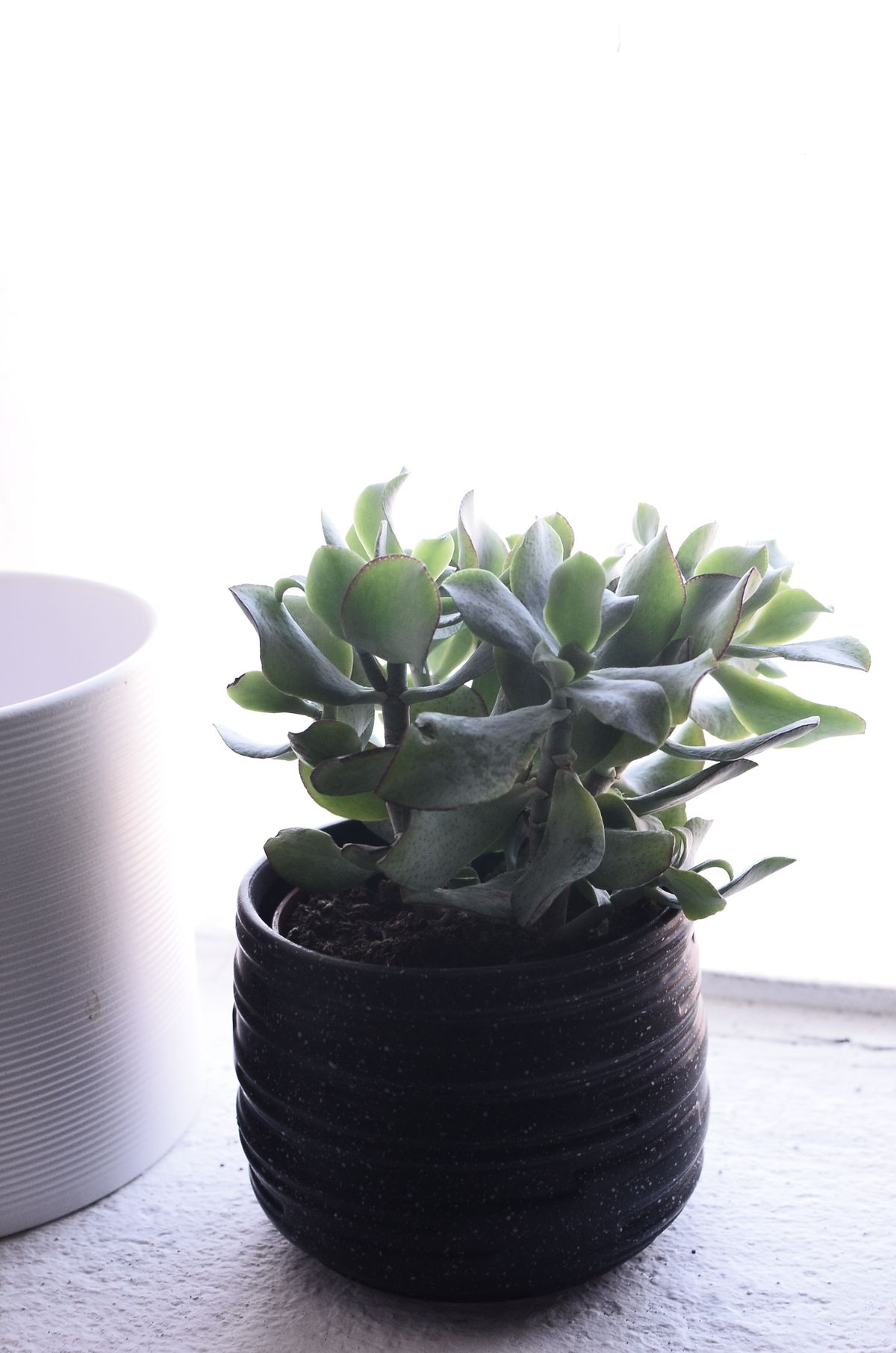
The best place to begin with a jade plant is below its leaves. Look at the base of the stem, see how it meets the soil and try lifting the pot. A small jade can already be quite heavy above ground, and an old one may support its whole canopy on two stems no wider than a finger. A good pot steadies the plant while leaving its roots enough air. Strong light then gives each new pair of leaves a chance to grow close to the last. The compact branching people like in a mature jade follows from those simple conditions and develops over years.
Find the light that gives short, firm growth
Set a jade close to your brightest practical window. The light that hits a kitchen counter several feet from the glass can be much weaker than the light at the window itself. Jade can use several hours of direct light once it has adapted. A plant brought from a dim shop or a dark winter corner should move in steps. Start with a position out of the strongest rays and increase exposure over a week or two. Check the leaves facing the glass for pale or dry patches as you go.
New growth tells you whether the move is working. Compact, firm leaves close together on the stem suggest the plant is getting useful light. A long gap between the leaf pairs and a lean toward the window are reasons to move it closer or add a suitable plant lamp. A red edge can occur on some cultivars in strong light. Large bleached patches or papery areas indicate damage and will remain after you adjust the exposure. Leave a little air between the plant and the glass so it has room when daytime temperatures climb.
In spring, an outdoor position can supply much more light than any window. Wait until nights are reliably mild, then begin in shelter. A week in bright shade gives the leaves some time to adjust before gentle direct sun. Do not leave an indoor jade exposed to cold rain while you are working out the right position. A saucer that would be easy to empty indoors can fill unnoticed outside. If you bring the plant back in for winter, check the branches and lower leaves for insects before placing it among other plants.
Fit the pot to the root ball
A jade can be surprisingly small below the soil line. Choose a container that leaves a modest margin around the roots. Glazed or unglazed clay can add weight at the base, which is useful for a plant with a leaning canopy. Unglazed clay lets moisture escape through its sides and may dry considerably faster than glazed ceramic or plastic. Check the opening at the bottom. For a large pot, have a tray or saucer that is easy to see and empty once the mix drains.
Use a succulent mix that drains freely. Test a handful of the damp mix. It should loosen when rubbed between your fingers. A fine material that clings together can be opened with mineral components such as coarse perlite or pumice. Choose particles that retain their shape when wet. Ordinary garden soil tends to compact in an indoor pot. A gritty medium with air space is especially useful in a home where winter drying is slow.
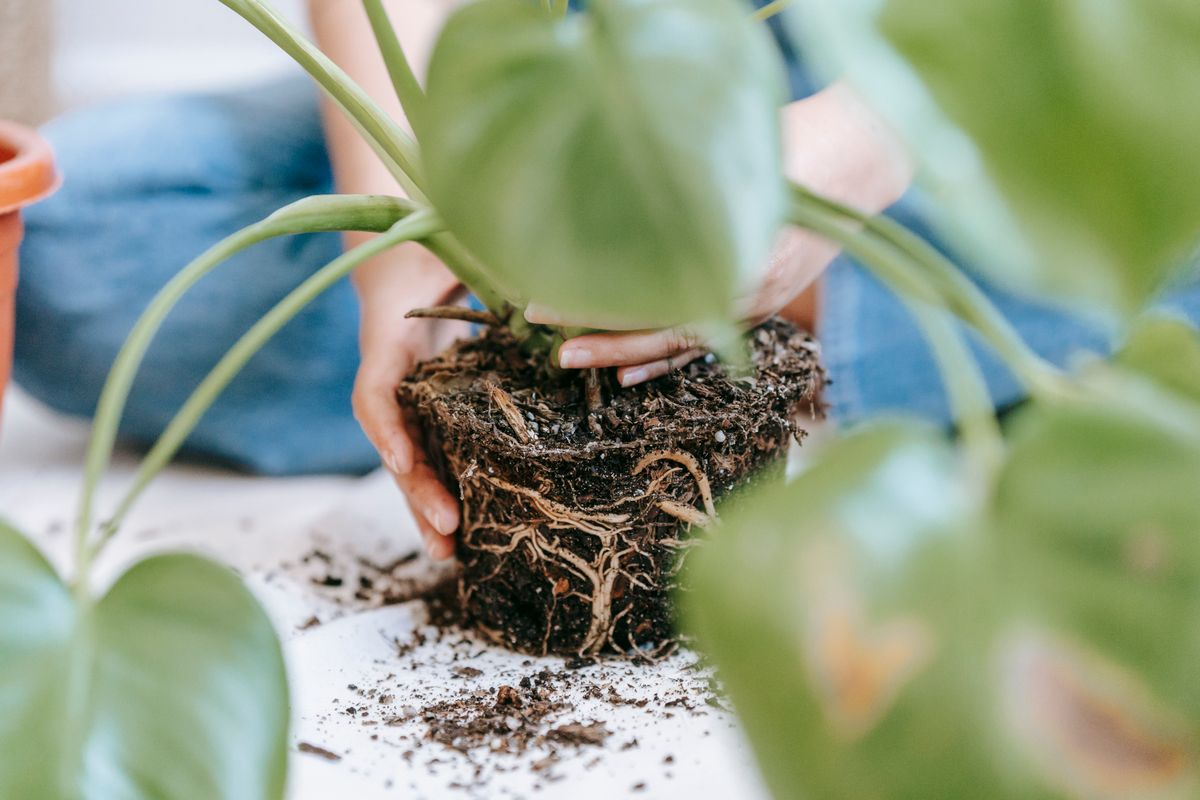
Check the plant in spring before automatically moving it into a bigger container. Lift it by supporting the root ball and easing off the pot. If the roots have space and the mix still wets and drains evenly, the same pot may serve another season. If a dense mat has formed around the bottom or water passes through almost without wetting the middle, it may be time for fresh mix. Set the root ball back at its original depth. A stretch of woody stem that has always grown above the soil can stay there. Fresh mix against that stem will hold moisture where the plant does not need it.
Water thoroughly after the mix has dried
Jade leaves store water. Let much of the mix dry between waterings, and in slower winter conditions let it dry well before watering again. Check below the surface with a thin wooden skewer or lift a small pot. Get to know its weight before and after watering. The difference is often more reliable than the color of the top of the mix. A plant with a deep pot can still have plenty of moisture near the base even when the top looks pale.
When the pot is due, water the mix until runoff appears. Let it drain and empty the saucer. If the medium has dried away from the pot wall, use a couple of slow passes so the water can reach the root ball. A daily splash on top of the soil keeps part of the mix damp while leaving deeper roots dry. One complete watering followed by a drying period is easier to assess. Outdoors, count rain that has reached the pot. Move it under shelter during prolonged wet periods if the container cannot dry between storms.
Check the plant itself before making exceptions. Wrinkled leaves and a light pot suggest it has gone too long without water. If the pot is heavy and the leaves are shriveling or dropping, inspect the roots. Roots sitting in wet soil can decay and leave the leaves without a working water supply. Soft dark stem tissue near the soil calls for prompt attention. Remove dead material and use a small clean pot for any healthy rooted portion. A firm healthy branch cut well above the damaged area can also be saved as a cutting.
Prune after deciding where the weight will go
Step back from the plant and view it from the place you usually see it. Decide which branch is pulling the trunk out of balance or blocking light to the center. For a young plant, pinch or cut a growing tip just above a pair of leaves to encourage branches below it. A healthy plant often sends out new growth from the nodes just under the cut. The direction of those leaves can help you anticipate where the next branches will start. Make a few cuts and wait for the response before reshaping the whole crown.
For an older branch, use sharp cleaned pruners and support the weight of the branch with your free hand. A long heavy piece can tear under its own weight as the blade comes through. Cut a small piece off the outer end first if you need better control. Give the plant light and room for new growth after pruning. A bare section in a dim room may take much longer to push fresh shoots than the same section near a bright window. Leave enough healthy foliage to support the plant while it recovers.
Root a useful pruned tip if you want a spare. Remove lower leaves from a firm piece of stem, allow the wound to dry and form a callus, then put the base into a small pot of suitable mix. Place it in bright filtered light. The cutting has leaves with stored water and takes time to establish, so avoid saturating the medium. Once fresh growth is visible and the cutting holds firmly in its pot, move it gradually into brighter light. If you are pruning a large plant for shape, label cuttings by the branch they came from when the leaf patterns vary.
Maintain an older plant without constantly repotting it
A jade can keep an attractive shape for years with small adjustments. Turn the pot gradually if one side reaches farther toward the window. Wipe the flat leaves gently with a soft damp cloth and look at where each pair meets the stem. Cottony masses in those corners can be mealybugs. Isolate a plant showing an infestation and inspect the sheltered joints before returning it to a collection. Clean up fallen leaves in the pot so they do not conceal new insects or soft stem tissue.
Feed lightly during active growth, following the directions of a fertilizer suitable for succulents. A healthy established plant with compact growth may need little added fertilizer, especially after fresh mix. If it stopped growing during a dark winter, concentrate on better light and an appropriate watering interval before adding nutrients. Keep pruned leaves out of reach of pets, since jade can be toxic to them if eaten.
Take a photograph from the same angle after each major adjustment. A plant that looked unchanged from week to week may have added several branches by the end of the season. Mark which branch you plan to shorten next and wait until you can see whether it still needs it. As the wood matures and the new growth stays compact, the plant can keep its balance without another large pruning session.
If the oldest stem has started leaning, check whether it is anchored firmly below the mix. A healthy woody stem that tilts without moving at the base may only need a small pruning cut on the heavy side. A loose root ball may benefit from a stake while new roots develop. Tie with a broad soft loop and remove the support once the plant can hold its own weight.
Back to top